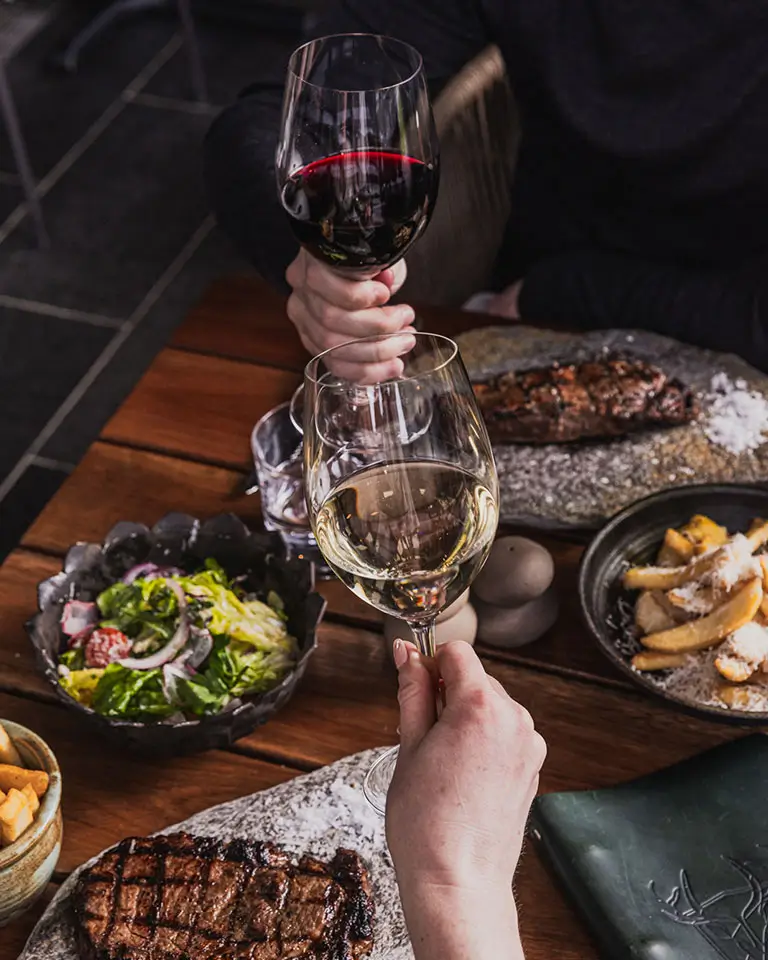
Matching wine with food comes down to balance—great wine pairings enhance flavour, rather than overpower it.
Choosing red or white wine comes down to the meat, the sauce and the properties of the wine. Red wines are generally fuller-bodied, richer and have bolder flavours, compared to whites that are more subtle and higher in acidity.
This guide simply breaks down red wine vs white wine and shows how to approach matching wine with food across different meals. So, whether you’re cooking with steak, poultry or other meats, we’ll help you find the best wine for a balanced flavour.
Understanding the Basics of Red vs White Wine
The key to a successful wine pairing lies in understanding the differences between red wine vs white wine and how they interact with flavour, fat and texture.
As a rule of thumb, red wines are fuller-bodied with tannins that add structure and pair well with rich, fatty meats. White wines rely more on acidity, freshness and fruit-driven flavours, making them ideal for lighter dishes or sauces and leaner meats.
Key Characteristics of Red Wine
Fuller-bodied red wines provide a deeper flavour that can stand up to and complement these fattier meats. This richness comes from a higher amount of tannins, which is simply the grape skins, seeds and stems. Using more of these skins results in a thicker body.
It makes red wine a natural fit for grilled or roasted red meats. The fat softens the tannins while the higher tannin concentration cuts through the meat’s richness to create a perfect balance. Red wines can incorporate stronger flavours such as dark fruits, smoke, spice and more earth tones to mirror the char and intensity of fire-roasted meats.
Key Characteristics of White Wine
Compared to red wines, white wines have a lighter body and higher acidity profiles. This is because they’re fermented without these grape skins, resulting in fresher and brighter flavours.
Acidity is the key difference—it refreshes the palate and lifts lighter dishes. It pairs perfectly with lean meats, poultry and seafood. Without the harsh tannins, white wine introduces notes of citrus, fruits and floral aromas to complement and provide more subtle flavours that let the meat shine.
Matching Wine with Meat: General Guidelines
When choosing between red wine and white wine, start by thinking about the structure of the dish. Consider:
- Heavier meats suit fuller-bodied wines
- Leaner meats suit lighter wines
- Higher fat calls for higher tannin or acidity to cut through
- Cooking method is just as important as the protein
By following these principles, matching wine with food is a fun, intuitive process, rather than intimidating.
Steak and Red Wine Pairing
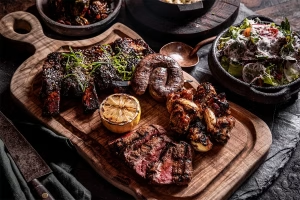
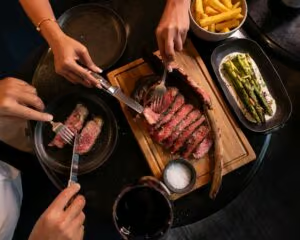
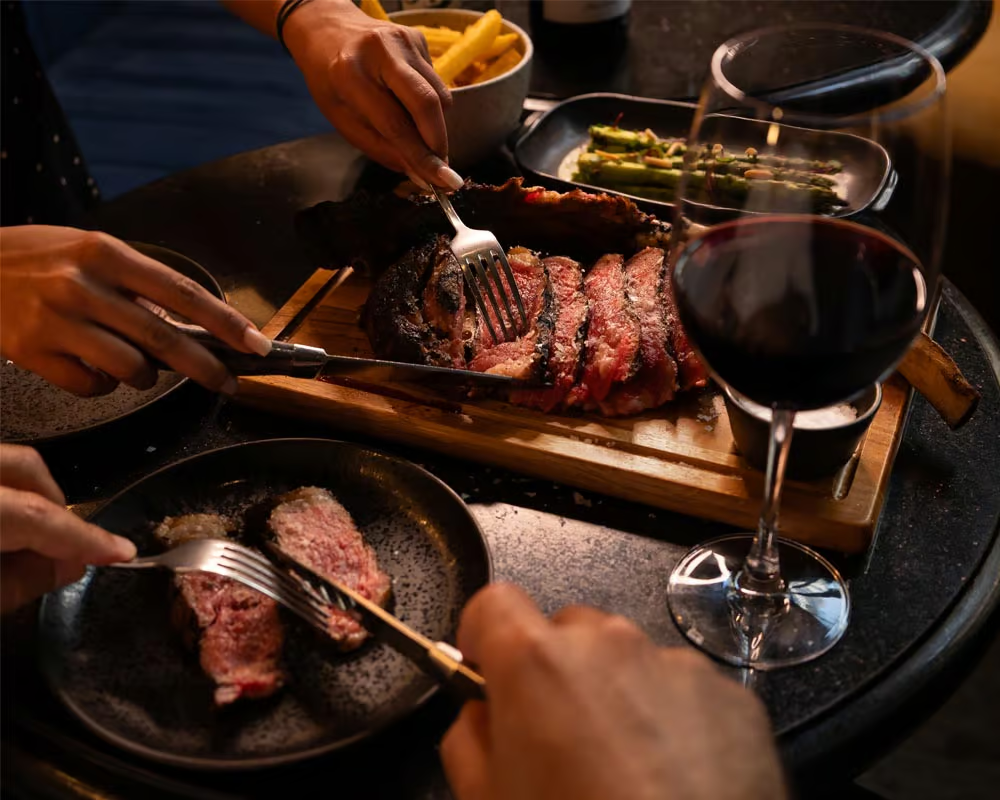
Steak and red wine are a classic for a reason. Fatty cuts like ribeye, sirloin or a porterhouse that are grilled or charred benefit from the structure, full body, and higher tannins found in bold red wines.
Cabernet Sauvignon pairs well with heavily marbled steaks that have a bolder and fatty flavour, as the firm tannins and dark fruit can stand up to the meat without being lost. Shiraz complements charred flavours or spice nicely, especially over an open flame, and a softer Merlot is perfect for those leaner red meats that don’t overwhelm the meat.
Poultry and White Wine Pairing
Poultry is a lighter type of meat, which makes it a natural fit for white wine. Chicken or turkey benefits from wines that offer freshness, acidity, and citrus that balance and lift these lean and tender meats.
Chardonnay works well with roasted or creamy poultry dishes that echo more buttery textures. Sauvignon Blanc’s higher acidity suits grilled or herb-seasoned chicken, which cuts through these richer herbs without muddying the flavours. Meanwhile, cleaner and more neutral wines such as Pinot Grigio are great for simple preparations and an all-around option if you’re unsure.
Lamb, and Other Meats
Lamb can be an intimidating meat to cook and pair with wine, but it doesn’t have to be. It sits between steak and poultry in richness, with both red wine and white wine as fantastic options, depending on the preparation and richness.
Roasted or grilled lamb with a little more fat pairs beautifully with medium to full-bodied reds such as Shiraz or a Cabernet blend. For slow-cooked or lightly seasoned lamb, fuller-bodied whites such as oaked Chardonnay are fantastic options, especially when sauces are more creamy or herby than spicy.
For game meat and richer cuts, this requires a little more intuition. Follow the general rule that leaner meats will require lighter wines compared to fattier game meats that require a bolder, richer wine.
Red Wine vs White Wine: When to Break the Rules
Matching wine with food doesn’t always need to follow strict rules. While tradition is a great starting point, taste and individual preference can only come through experimentation.
Don’t be afraid to try red wine and chicken, especially if the meat is grilled, smoked or served with a rich sauce. Likewise, white wine can work with steak, particularly lean cuts or dishes served with herb-based sauces.
Experiment with different sauces, marinades, and spices because these factors are just as important as which meat you use and the style of cooking.
Tips for Perfect Wine and Food Matching
When matching wine with food, keep these simple tips in mind:
- Trust your personal preferences, the best is often the one you enjoy most
- Match intensity first, light dishes prefer light wines, and rich, heavy dishes benefit from red.
- Explore regional pairings as wine is incredibly sensitive to the local climate.
- Balance acidity and fat—remember acid refreshes and tannin cleanses.
Ready to Taste the Difference?
Craving perfectly cooked steak? Visit Hunter & Barrel in the UAE, with restaurants in both Dubai and Abu Dhabi. It’s the perfect place for a night out, a long lunch, or a celebration with family and friends. Book your table now or explore the full menu.